Friday, December 9, 2011

Things That Are Different


There are a number of things that we are doing nowadays that we don't normally do— things that we'd never be allowed to do at home.

It's an interesting juxtaposition— you take off for a year and suddenly you're doing all sorts of things you'd never be allowed to do because your parents look at you incredulously whenever you suggest it, then say a definite 'no,' or you would find it very important in the first place and now don't.

Number One: Nutella.

Nutella, when I was five years old, was the best chocolate around. (It still is). It was also a very rare treat, because Nutella used hydrogenated (or partially hydrogenated) oils— something our mother restricted. A lot.

As we got older, Nutella was turned into a 'birthday present' item. It was sufficiently rare enough to be able to ask Mom— "listen, since Ioan's birthday is coming up… can we have Nutella?"

And the answer would be "yes, I guess." But… and this is something I'm thinking of just now… we never actually thought to ask for it, so perhaps if we'd asked they would have said 'yes.' But that's not the point.

The point is… we are in Kathmandu, and we are eating a sandwich meal— the kind of dinner we always have at home— some bread, cheese, meat product (includes fish), and a knife. And then we make our sandwiches and don't have to worry about ordering the ravioli or the penne, the chicken tandoori or the grilled cheese sandwich. And it's heaven.

But… as we're eating (and it's seven pm— close enough to our 9:00 bedtime), Dad suggests leaving a piece of bread for Nutella.

Now, when we went shopping in Kathmandu, I found a jar of Nutella and held it up. "Yes?" I said,
Mom looked at it dubiously. "How much does it cost?" (Cost is important.)
I rattled off the number,
"You don't have anything to eat it with." Mom said (past forays into the world of nutella eating meant spreading it on bread or some other foodstuff and then eating.)
"We'll use our fingers." I say. I judged the situation, and then grinned. "Super." I said.
"What?" Ioan asks.
"We're getting Nutella." I said. The last time we had Nutella was… camp. In August. And that was a jar that a girl brought in… the girls in the cabin passed it around taking fingerfuls. Before that I think it was Ioan's eleventh birthday. But I'm not sure.

That was the first jar of Nutella this week. We're on the third. We eat it with spoons, taking one or two at a time (which means five to ten spoonfuls… which does not explain how one moment it's started and then it's finished— I certainly don't seek out the Nutella jar midday. And yet it seems everyone else is).

Reread that a moment. Spoonfuls of nutella. Plain nutella. Nothing else even close to it. AND… at 7 pm. A time when normally even orange juice would be frowned upon… and our parents are eating it with us, which is nearly as unheard of as eating nutella at 7 pm.

(It's 8 pm the next day… we're eating nutella.)

Number Two: Forget about the TV.

It's true.

When we first arrived at this hotel, we went and dumped our things wherever it is you normally dump things in a hotel room, plugged in our laptops, and started chugging away at whatever it is we normally chug away at.

When we left the hotel for Chitwan, after four days of living in the 'apartment', Dad peeked into the room I share with Ileana, and said, "Oh! You two have a TV too!"
"Really?" I peeked into the room myself and was surprised to find it was true, "Cool!" says I, picking up my backpack and slinging it over my shoulder.

Now, there are two options, one of which I like more than the other (I think you can guess which:)
1) That we have become so obsessed with laptops and iPod Touches that we don't notice TVs any more.
2) That we watch TV so rarely now that we don't notice TVs any more.

A third option, now I think of it is,
3) We're too lazy to channel surf for something 'cool' that we just ignore it.

I'm thinking that the third option is the most realistic, to be honest.

Number Three: Eating at an Italian Restaurant 4/5 times.

We live above a charming restaurant with nice Nepali people that smile very brightly whenever we come in.

It's called Alchemy, and it serves Italian food. REALLY GOOD Italian food.

Part of the reason we eat at Alchemy so often is because Nepali, Indian, Chinese, and Tibetan food has a high chance of being spicy/ distasteful to our palates.

(At home our diet is something like this: Salad, chicken cooked in the oven (perhaps pork, if we're lucky), rice, spaghetti… you know? Bland foods?  Things easy to cook within 30 minutes, usually 20?)

ALSO… because it's Italian… we know practically what everything on the menu is and whether we'll like it or not. Has mushrooms? Iffy. Anchovies? Definite no. Bacon? Maybe… Spaghetti with tomato sauce? Yes.

If it's Nepali… we have to figure out if we're going to like black bean and lentil curry or if it's going to make us cry from spiciness (it's good, by the way). In China, we have to look at the pictures very carefully to try and figure out if it's going to be so spicy we can't eat it.

In Japan… we have to learn to avoid anything that looks REMOTELY fishy.

In Tibet… well, Tibetans are not known for their cooking skills. We did find some nice restaurants, but I suspect it was because there were Nepali cooks making everything in the kitchen, not Tibetan ones. I think I remember Tsewang saying something about the differences between Nepali and Tibetan cooks, but I'm tired and I can't remember.

Another reason we eat at Alchemy is… yogurt.

Alchemy has REALLY GOOD organic yogurt— it's unsweetened, and is literally just plain white yogurt that you can find at WalMart… only ten bazilion times better. It's slightly sweet and slightly sour at the same time, and there's never quite enough yogurt to go around, to be honest. Also… it's good for your stomach! What could be better?

Number Four: Schoolwork for just two hours a day.

Yeah… It's a fantastic upside. Of course… the downside is that we didn't have summer vacation for 3 years beforehand, and that we've been working like dogs since we started planning the trip… but… really? It's two hours of school a day. It's ridiculous. It's amazing. It's heaven.

We'll get up in the morning, hang out till about eight or nine, then go upstairs and eat… and at about nine or ten we'll startt schoolwork, go for two hours or four (I usually go for four. I'm not sure why.), sightsee, and then come back home and hang out some more.

It's wonderful to be able to just go to Khan Academy and do a couple of problems, then switch to GIMP and draw a couple of lines before heading back to math.

I'm stuck on Rates problems, though. I got ALMOST to the end of the bar… and then I typoed a three instead of a four while calculating… and lost HALF the bar.

It's annoying. But… well, at least I'll know rate problems inside out from now on! I doubt I'm ever going to have a problem with the formulas of them again. Khan Academy is nice that way.

Number Five: No muse and no motivation.

This is kind of a bonus, since it's not exactly something that would never happen at home… but Muse is off somewhere… I'm not sure where. It seems she's decided to abandon me.

This is bad… since I've got at least four projects (not in order of importance— they're ALL important!) I need to work on in order to make my 4.5 words a day quota. (I haven't hit the quota in a while now… and I'm starting to get worried about my ability to catch up by the end of the year.)

The Blood Feud needs about ten thousand more words in order to be finished. After it's finished I'm going to finish uploading it to WeBook and then I am going to look away from it for the next six months. Then I'll see if it's worth tackling. These last ten thousand words mean that I have to wrap up all the loose ends— which means going back through the narrative and checking off which lines I've finished and which I haven't. It means work. I'm reeaaallly not in the mood for work right now.

NaNo Swap… the part where I plan a novel for someone else before December 19th, isn't working out so well. Muse is gone, you see, and that means that any interest I had for any project is practically… nil. And yet I have to make character sheets and I have to figure out what the main character's house looks like… all in ten days. I'm seriously wondering what I was thinking when I agreed to a NaNo Swap.

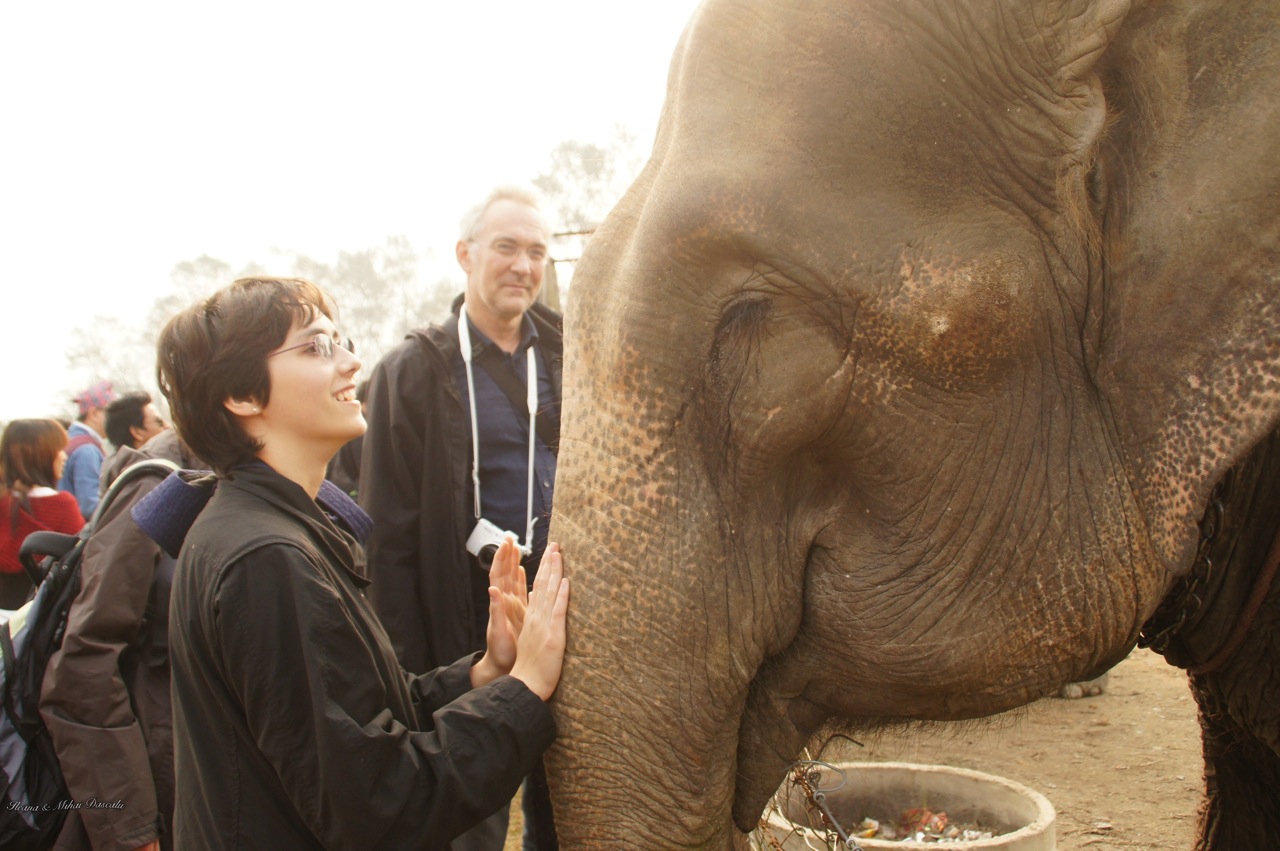
The Blog. I think I'm about… one blog post behind on Noi6, and I need to upload dares to another blog, and I need to figure out what the next blog post is about. It's hard, see? You can only read so much about the elephant ride we had in Chitwan… or about the terracotta warriors we saw in China. Eventually you start to wonder if the Dascalus can think of anything besides the same old things they've seen. Also… we went, we did, we took pictures. WHAT ELSE IS THERE TO SAY?, is kind of my outlook on our adventures. So I'm constantly searching for something to give a little personality to my experiences.

Riddle Rose. In November I came up, much to my chagrine at the time, with an idea for a Beauty and the Beast retelling, including riddles and a shapeshifting beast (which becomes everyone's worst nightmare, somewhat like JK Rowling's boggart… but different). This was bad because it distracted… heavily… from The Blood Feud. But now I'm sick of that and slogging on everything anyway, so I started Riddle Rose, which I posted on WeBook (http://webook.com/project/riddle-rose), and which I asked a couple of friends to take a look at. So far people like the premise, the writing, and the title. Except for the title, I don't quite understand any of the praise.

So… while all these projects are worthwhile and I reaaallly liked them when I started them… with Muse gone, they all seem somewhat colorless, except for Riddle Rose, which enough people have squeed about to make me excited about writing it. I mean… if you get adoration… might as well do the thing, right? (Not to mention that Ioan is hanging about me as I use the computer… asking me when I'm going to add Chapter 3.)

But, luckily, slogging has proved helpful during NaNoWriMo (I was slogging practically all the way through The Blood Feud— which proves I must have some version of self-control), and so I'll keep slogging through everything else until Muse comes back.

In other news, I need to read 13 books in the rest of December, including 85% of Middlemarch, by George Eliot, and 50% of Steve Jobs, in order to hit my book goal for the year and get a shiny badge on my GoodReads account. (I like badges). Other books on the list include Northanger Abbey, Adam's Tongue, Sense and Sensisbility, and some of Andrew Lang's fairy books. I don't know what I'm thinking reading Jane Austen at a time when I need quantity… but I've never read Northanger Abbey and the last time I read S&S I was twelve… so I'm going to read it and possibly even tackle Lady Susan.

And in 2012 I'll go back to Persuasion and reread it for fun. I like Persuasion… it's more… mature.

And because I could go on and on and on about the lovely books I've been reading and the lovely books I'm going to read… I'll stop here and just add that I love ABBA and their songs.

Perhaps the books will be a separate blog post, right?

Total words for MilHalfy Challenge: 283,157/1,600,000 (17.70%)

Wednesday, December 7, 2011

Elephants


We finish quickly our breakfast, because it's time we leave for the elephants. We climb into a jeep, drive for a few minutes until we reach Chitwan National Park. To be honest, we are in the buffer zone. We get down, pass a few stands with food and juices, and two with souvenirs. We follow the dirt path to a fence with wooden ladders. On the other side is... an elephant, who wears a straw pallet with a cubic wooden frame. Four people on an elephant. Maria volunteers to go separate. We are instructed on how to sit and I choose my place: backside on the left hip. The mahout (elephant driver) nudges his animal and we go.
In the beginning... slowly, to learn the rhythm. Dang-dang forward-left, backward-right and again.
A short break. We stop because the other elephant needs to relieve herself. We start again, toward the river.


Suddenly we change slopes: we go down a steep bank! What if he wants to spray us with his trunk? Fortunately, he is a well behaved elephant. On the other side of the river the mahout realizes that the elephant doesn't move quickly enough so he starts banging him with a stick, and because he still doesn't move, changes to an ankh (a metal instrument with a hook—described better in "Jungle Book" by Kipling). The elephant decides that is better to follow the instructions, so now we are shaken quickly. We enter the so-called jungle. The fog starts to lift. We hear different calls and when we are close enough we can see the birds. We talk in whispers because we don't want to scare the few little wild animals who didn't react to the elephant's approach. We can feel under us a barely audible vibration: the elephant is talking. He is communicating with the other through low frequency sounds.
Heeeey! yells the mahout in his language and starts a conversation at a distance with the other one. Until now we walked together, but we just separated, ours saw some deer. Many grown-up Bambis looked at us from under the leaves.


Moving on. Our legs start to get tired. If we leave them hanging down, leaves and branches hit us. I find a stick on the side of the padding that I can rest my foot on. Dang-dang. The top part of the cage is around my shoulders. It makes me feel secure. But it's not ergonomic for taking pictures. If I put my arms on it, they go to sleep. If I lean on my shoulders and raise the camera on the other side, it hurts from the trepidations. I change my posture frequently and am OK.
We continue. For a while there was a third elephant behind us. Bushes, trees, bushes, trees. How interesting... Flap-flap-flap... A small eagle with a lizard in its talons flies in front of us. Disappears and then we see it again in a tree. The lizard was long dead and dry, so now the eagle is looking around for more food.
Now we are alone. Maybe we'll see something... we tip-toe (in an elephant way) into a clearing and... surprise... we stop! And stay. I start to doubt the ability of our mahout to find wild animals in this area. Maybe he is lost? Is he waiting for the other ones to help him out?
We wait patiently on our elephant and see something moving. Ioan stands up in the cage. A monkey! No, seriously, a monkey. The child is right, a monkey moves stealthily through grass, climbs half way up tree, relieves itself and goes away. A baby monkey follows it at a short distance. Hmmmm, maybe if we wait a little bit, more monkeys will come. In the meantime we reunited with Maria's elephant. For sure that's what we're doing, because, see... there is another monkey at the edge of the clearing. We're still waiting and from the forest emerge ten elephants, each one with four tourist and a mahout! We were the monkeys?
We leave in a group. Super, now for sure we are not going to see anything! All the tourists are quiet, the mahouts are chatting as a contrast. They're shouting at each other. We reenter the forest and in a different clearing... a rhinoceros with its baby! 


Woooow! Suddenly the tourists come to life: they take pictures (we were trying to pass each other the camera, depending who had the best view). The mahouts are pushing their elephants in the first row; we have time to watch without the camera: the calf was behind its mother, trying to eat grass. They are doing their own thing and at some point they turn their behinds toward us.
This is how it really looked.

We can say we saw something on this walk. The group of elephants disperses, each following its own path. In silence we walk toward a green pond. On its bank we stop. This time our mahout felt the call of nature. He just came back when two more elephants stop behind us. Our mahout stands on the head of the elephant, steps onto the next one and sits. It is his friend and colleague's turn to relieve himself! Good thing the tourists are not allowed, else we will still be there waiting in line!
OK... we're moving. We count: we see spotted dears, grey ones and a stag, an eagle, a rhinoceros with her calf... what else do we get to see? The end. We walk toward it in a rapid and spontaneous rhythm. The elephant knows that he is going to eat and after that he is going to take his bath, so he doesn't need any coercion to hurry up. He rear parks... we climb down one after another and look at our elephant: it's a she with white spots on her ears and trunk (a sign she is old enough). We caress her: she is warm and has prickle hairs. In the end we have to go, at 11:30 we have to wash two elephants.


We dress in our long bathing suits, we put our Teva sandals, especially bought for this occasion and wait in an agitated fashion. The manager of the lodge comes and tells us we don't need the sandals, so the children abandon them without regret. The river is at 300 yds distance and it's supposed we are going to get to it on the elephant's back. First they have to make the elephant sit down in that sandy spot. Then they arrange the ladder next to it and we climb: Ioan, Ileana and then me (Maria will go on her own elephant). We have to hold tight onto the mahout so we will not slide down when the elephant gets on his feet. It is not difficult to sit on it, just uncomfortable. I'm trying to remember from the horseback riding lessons how to hold my feet, a little bit bended and apply pressure, that will give me a good grip.


 We step into the river, where the current is strong, and ...splish-splash Ileana and Ioan fall into the water (they didn't anticipate the moment of lying in the water). Laughs. The mahout tells us to climb on again. I'm glad, thinking that we move in a different spot where I can stand. No such luck. He pulls its ear and shouts a command again and again until willy-nilly the elephant sprays us with its trunk. Once, twice, thrice. It would be funny if the elephant would like it too. It is a contest of wills, the elephant is not in pain and the only hurt feelings from the shouts are ours. Ioan is the first one to give up and tells the mahout that we had enough. We move and dunks us again in the water. With a rock we start rubbing its dark brown skin. On his back he has wrinkles. On his sides has more hairs, a reddish brown, than on his back.


 It doesn't take long and we have to leave. The mahout teaches us to hold onto both its ears, and push his trunk so it will help us climb onto its head. He pulls its ear again, and this time the elephant starts easily to spray us. Slowly, with the feeling that we did something extraordinary, we return to the sandy spot.


In the afternoon we have scheduled a visit to the Elephant Reproduction Center. We were taken there into a single tree canoe (silk cotton tree; in 25 years will get to the required dimensions; unfortunately a canoe, even with the best treatment, will resist only 10 years). 


 On the banks of the Bhuri Rhapti River (the Old River) we saw a gharial (a crocodile with a long and narrow snout), marsh muggers (normal crocodiles), all kinds of birds (peacock, egrets, stork, kingfisher).


The center was a small building in which you could find the ticket counter, the room for the soldiers (the park has army surveillance) and the information room. We spent 10 minutes in the last one, reading about the history of the park, about elephants in general (anatomy, reproduction, captivity) about their dressage.  They need three men for an elephant: one cleans up, another provides the food and the mahout will train it, etc. In an elephant's life (70 years) will be two or three mahouts. At two years they start the training. The calf is separated from its mother, tied up with both front feet to a pole, deprived of food and water, to weaken it and not to be able to hurt itself or the people. The basic training will take a month and is complete in approximately two years. In this world there is no one who studied the elephants language? Their rules and their society? Don't they have an elephant whisperer, to use body language and low frequency sounds?
Outside we see a baby elephant walking under a big one. It is pushed with the trunk and that causes a third elephant to trumpet and flutter its ears. This is the real mom! The baby comes to her, suckles a little and then moves on freely. 


We saw twins (I didn't know they could have twins), two boys two years old. They were half the size of an adult and soon they will start the training... Somewhere far away a calf was touching with its trunk its mother like in a tag game, and she was shaking her head... he wanted to be spoiled and suckle, but he was too big. 


Eventually he got his way.

Tuesday, December 6, 2011

How Are You Doing?

We are doing pretty well. We've been on the road for 52 days and we seem to settle into a normal traveling mode. 

The main negative factor is that it seems not to be enough time for anything. We don't have enough time to read about the places we will visit, we don't have time to play, to watch a movie or do almost anything. There is not enough computer time, to process pictures or write the blog. There is absolutely no time to watch the video we film, or to make a little family movie. Ileana Ruxandra watched Chinese TV for a few minutes one day. I also browsed the channels for one minute another night. In Japan, we watched a couple of minutes in Tokyo, not once in Kyoto. In Kathmandu were we ended up with three rooms connected in an apartment, there are two TVs, one was in our room, very good to hold my towel to dry. I noticed the second one when we left, I told Maria: "so you did have a TV in your room!", she replied: "We do? Where?" It was in front of their bed for five days! We started two card games, didn't have time to finish them.
We do have some documentaries and movies saved on the computer, but we only had a couple of movie nights. We read a couple of books out of hundreds saved on kindle and nook. The children started the trip with a short vacation but now they are resuming school and this will take even more of their time. 


But, the time we had we used it wisely, we chose to sleep when we had a bed or a seat in a bus or train, to visit places, watch out the window or talk with people when we were awake. Quite often a meal takes a couple of hours, finding an acceptable place, ordering, waiting for the food. We talk with each other, we make decisions together. I think we work well as a team, although there is no progress in getting help from the children in organizing daily activities.


Tonight, at dinner I asked my family how are we doing. They all think we a doing well, they don't have suggestions for improvement, Ioan and Maria miss their friends a bit and Ioan thinks that 15 months will be a really long time for travel.
We do have too much luggage, some of it "just in case", some of it waiting to be used down the road at specific points (water camera, car inverter). We were considering getting rid of one of our big bags, we decided to keep the bag but get rid of some content. We will eliminate the winter clothing, one coat for each, that will certainly make a little difference, but maybe Ileana will have a chance to write about that.


There are so many positives, I'll mention just one: I learned that I can eat anything. I never ate spicy food: one day in the Anatolia restaurant, me and Maria decided to share "Chicken Tandoori", she didn't like it, it was too spicy. I ended up eating it all, it was really hot but it was good. To mitigate the spiciness I didn't have bread or something else, I ended up successfully using raw onion to sooth my burning mouth. 

So, again we are doing great, how are you doing?


Monday, December 5, 2011

The Butterfly Liberator

Chitwan National Park, second day. Ioan and I wake up at 6.30 to go on the bird watch trip. He seems OK, but it's almost funny to see him getting out of bed like an 80 year old, puffing and aching. He has sore muscles from yesterday's elephant activities. We leave at 7, a guide, a Dutch guy and the two of us. We take the road for a couple of minutes, the guide mentions the serious fog, little chance to see anything. I ask why can't we go later and we readily agree to postpone the trip for 8.30. Ioan goes back to bed and won't leave for the rest of the day. He is clearly under the weather, maybe a touch of fever. I leave again, with Kris, the Dutch, and the guide and we have a good 3 hour bird watching trip. Nothing happens at first but at some point we see some kind of crow on the back of a rhino, I get good shots moments later and more birds join in.

A wounded rhino welcomes birds. They clean the wound and this helps it heal faster.
Birds on the rhino. Can you see the little wound on the left side of the picture?


We see a few more birds and a rhino with a huge horn and a huge erect penis. No pictures of that or just by special request. The guide is amazed, apparently the rhino got excited when four women came in his way. It calms down and lays on the ground, blocks the pass over a creek, we have to jump over it.


We end the trip at the guide's house, and while waiting for the car to pick us up, we talk a bit about economics. Everybody here saves money to build a hotel, buy an elephant and a car. The elephant might cost €25000 ($33000) but you can make $100 per day and pay it off in 3 years. But the elephant might die, the car you can sell if it breaks and get some money back. We sit on his porch, his wife makes tea, his children are gone to school. He built the house himself, it's small, maybe twice the size of my bathroom, and there are 12 people living there.
In the afternoon we have scheduled a "jungle walk plus", the plus part is that at the end a local person will show us how they pick products from the jungle to cook food. Ioan was excused for being sick, Ileana sacrificed herself to stay with him, but couldn't hide her excitement. We walk for 3 1/2 hours without seeing any animal, maybe the distant image of a monkey, a deer and a wild pig. We see some trees, we taste the outer shell of some wild walnut, we see the imprint of a paw of a rhino, a nice marsh where rhinos sometime come and a lot of butterflies, spiders and termites. We decide we don't want the plus part and it works out fine that the guide forgets about that. The most action we have all day is Ileana jumping to free a butterfly from a spider web. So I call her "Mom, the butterfly liberator!"
Poor little butterfly

Monstrous spider

On better days rhinos and tigers and deer come to this little lake in the jungle

Nothing happens, but still looking for animals


Friday, December 2, 2011

Tibet Quickie


Previously on Survivor:
  • we went to Tibet
    • where we met our guide, Tsewang,
      • whose name means “long life”
      • who is the type of girl to stop traffic
        • not just because she’s pretty
        • but mostly because she literally stops traffic so we can cross the street to reach our hotel
          • or, as she (and everyone else, apparently) says, “hotle”.
      • and she gave us each a long white scarf to welcome us.
        • it did not keep us warm very well
        • but it was very pretty
    • we visited the Dalai Lama’s palace
      • both of them
        • because there are two:
          • the first one
            • which served the first five Dalai Lamas
          • and the second one
            • which was started to be built during the fifth Dalai Lama’s lifetime
            • but was finished in the sixth’s.
          • Random Fact: THERE ARE A LOT OF STEPS.
            • also there are a lot of benches for fat people because they can’t climb steps
            • proof of Kung Fu Panda, no.s one and two
              • and we kept repeating that one line from Kung Fu Panda 2: “Ah… my old enemy… STAIRS.”
            • mostly, though, the benches are so that the locals can put wool from their sheep on the trees
              • which apparently
                • brings good luck to that sheep
                • makes it have more wool
              • this is because it’s the Dalai Lama’s palace
                • which means it must give an automatic blessing.
                • Or something like that.
    • and we visited numerous monasteries
      • whose names I can’t remember
        • because they all look the same
        • but the first one was called the Sera Monastery (or something like that. The spelling is probably different).
        • but one of these monasteries had this thing where the monks would clap really loudly to wake up the ones in Hell (because they’re sleeping) so that they can hear how the monks ask questions and other monks give the answers
          • this is to relieve the ones in Hell of their ignorance so that they can get out of Hell.
      • which were very interesting and had very cool Buddhas
        • there are lots of different types of Buddhas, which include
          • the protector Buddha, which looks very scary to scare away the demons
            • there was a protector Buddha that had two heads: a normal scary head and a small horse head on top of it
              • it protected children from nightmares
                • I wish I had this Buddha around when I was a kid
          • the compassion Buddha, which has a thousand arms and a thousand eyes so that it can help us in our times of need
          • the white tara, which has seven eyes: three on its head, one on each hand, and one on each foot
          • the green tara, which I’m not too sure about, but its foot is on a lotus. Or something like that
          • the past Buddha, whose name I forgot, unfortunately
          • the present Buddha Shakyamuni
          • the future Buddha whose name begins with a V. He has both his feet on the ground, which means he is ready to come into our world and bring peace.
          • there are five Buddhas: three past Buddhas, one present Buddha Shakyamuni who is the current Buddha, and one future Buddha.
      • and had very gorgeous paintings on the walls
        • which illustrated the history of various things including (but not limited to):
          • the history of the monastery
          • the history of Buddha
          • stories like
            • the one about the bird, the monkey, the dog, and the elephant, who measured their age against a tree.
              • When the elephant came, the tree was a sapling
              • When the dog came, the tree was a sprout
              • When the monkey came, there was no tree
              • When the bird came, he brought the seed
    • we saw the symbol of Tibet’s independence.
      • “But this is not working very well,” said Tewan.
        • because Tibet is under occupation by the Chinese.
        • Random Fact: We were not allowed pictures of the Chinese military, because I don’t know.
    • we left Tibet, and on the way we
      • saw a lot of prayer flags
        • there are five colors for prayer flags, each symbolizing something
          • white for cloud
          • blue for sky
          • red for fire
          • yellow for earth
          • green for grass or peace
        • the prayer flags are hung up so that when the wind blows, it’s like the prayers are being read
      • went through a lot of mountain ranges in a nice car on a bumpy road
        • which liked to try to concuss us
        • and we sometimes stopped so that we could hike a bit
          • and see little shrines for the Buddha
          • and monasteries/nunneries
          • and see a lot of prayer papers, which had specific prayers
            • and a picture in the center
              • e.g., a horse for swiftness
              • or compassion Buddha
            • and were scattered around everywhere
              • I suppose this was with reason
              • but we mostly collected them
              • and made paper planes
                • which made me sing “Paper Planes” by M.I.A.
          • but mostly we just stopped for pictures
      • saw the four holy lakes
        • which were holy because they were saltwater lakes
      • slept at some more hotles
        • some of which were luxurious
        • some of which were not
        • all of which were freezing
      • and reached the Himalaya.
(Could you read that OK? It was probably very confusing, but I think it was the best way to make a quick recap).
Anyway, I would like to better detail the Himalayas part, and I would like to start with something that seems irrelevant, but leads up to something very important.
When I was nine years old, I went to summer camp with my bestest best friend Lydia. One day she told me the amazing truth of what she did during the summer: she visited the Himalayas with her family. Naturally I had an “OMG REALLY?!!!” reaction, but then I was suspicious. Of course, if I’d have had the sense to, I could have checked by asking her what country the Himalayas were in, but neither of us knew. We both assumed that there was China, and then there was India, and between them were the Himalayas. Pretty awkward when we found out about Tibet (which I had assumed was somewhere between Korea and Cambodia).
And while she was telling me about her yearly trips to the Himalaya, she suddenly remembered the Yeti, and told me that she found an orphan yeti and next to her, the skeletons of her dead parents. The story she told me was so absolutely fantastic that I can’t believe I believed her. Especially the part that if you name a Yeti “Destiny” they’ll immediately become your friend (like Shannon Hale’s The Goose Girl, where if you name a foal after the first sound it makes, you can communicate with it telepathically). She told me about how she and Destiny wrote letters to each other and played chess and how clever Destiny was. Of course, she later confessed she made it all up, which came as an actual shock to me.
What? You thought I was a super-genius? Thank you. But that is not the case. I am incredibly gullible and everyone is always pranking me because of this. Just for laughs, of course. But every now and then, some moron comes along and tries to be all tricky to prove how smart he is.


Moving on to more relevant things.
Even though I couldn’t believe that my bestest best friend saw what all the scientists and researches had not (the Abominable Snowman), I totally believed that there was such a thing as the Yeti.
Later, though, I had my doubts, and by the time we reached Everest’s Base Camp, I had no doubt that if there was such a thing as a Yeti, it obviously wanted to be found just as much as the unicorn.
And so, now we reach the important thing that all this irrelevance led up to:
THERE IS NO SUCH THING AS A YETI.
DON’T ARGUE WITH THAT.
AND DON’T ASK IF WE’VE SEEN ONE, BECAUSE WE SHALL RETALIATE WITH SARCASM.
THAT IS ALL.
Now that that’s out of the way, I can describe the Himalayas properly.
It’s really not all that amazing.
So let me explain: you’re in a [very comfortable] car [alternating between Guns N’ Roses “Mr. Brownstone” and your Guns N’ Roses playlist], driving on a bumpy road that makes you look like a phone on vibrate until you reach a bump, where you end up jumping so hard that you nearly hit your head on the ceiling. Not that this wasn’t fun. It really was fun. I’m just trying to convey my experience to you. In fact, go to YouTube right now and search “Mr. Brownstone” and listen to it on endless loop, or scroll to the end of this blog post where I have posted my playlist, and then start jumping up and down in your seat. At least until I’m done with the Himalayas.
Anyway, this bumpy road is completely the same color: yellow-ish brown. A pretty, golden-brown shade, yes, but boring. And the road is bumpy. And the landscape is flat until the mountains, which are not very sharp and craggy and interesting-looking. No. They are round, over-sized hills that inspire nothing. The mountains we climbed were more interesting, though.
On to Everest.
It’s the tallest mountain in the world (congratulations). Also it is holy. And it’s illegal to be buried on it. That is all I know about it. The last two I know because of The Bucket List (hilarious. Must-see).
That said, we went to the base camp, where you had a very nice view of The Tallest Mountain In The World (but no Yetis were sighted). Then, after hanging up our scarves from Day One, we took a few pictures and went on to Nepal (and the next “heated” hotel room).
Currently, as I write this, I am in a hotel room in Chitwan, Nepal, where it is actually warm. This is good. Now I’m going to finish and attempt to connect to the internet is rumored to be here.
KEY WORD: “rumored”.
Guns N’ Roses Playlist:
  1. Paradise City
  2. Out Ta Get Me
  3. My Michelle
  4. Think About You
  5. Sweet Child O’ Mine
  6. It’s So Easy
  7. Welcome to the Jungle
  8. Rocket Queen
  9. Mr. Brownstone
I should warn you, but I’m not sure what against. Basically, it’s 80s rock music. Assume the worst.
I know, I know, I love this type of music, but you might not. So enter the waters wearing a floaty-ring.
And and and… I listed this without checking. Not once. And I got it right.

A Blurb


Upon arriving in Lhasa, we are greeted by Tsewang Lhamo (TehWAN LahMO)— a name which she tells us means 'Long Life Fairy'.

And she does look like a fairy— 5'2", petite, with bright, beautiful, brown eyes, and a melodious, singsong voice that sounds amazing both in Tibetan and English.

Our driver's name is Tashi (pronounced DAHSHee), and apparently he will be our driver for the entire trip. (We went through four drivers, only the last of whom we actually spent any time with). We drive from the train station into the old part of Lhasa— which is incredibly busy.

Honking in Asia is a language— it's not like in America where a honk means "GET OFF THE ROAD!" or "HEY, BEST FRIEND THAT'S WALKING ON THE STREET! I'M IN A CAAAAAR!"

It means, "I'm here," "You're in the way," "Be careful," "Watch out," "Get off the road," or "Hey, best friend that's walking on the street! I'm in a caaaaar!"

Cars in Tibet do not care if you are a tourist or a little old lady carrying groceries (though there are no little old ladies carrying groceries), or if you're a strapping young boy. They will drive on THEIR road and if you want to get on it… well you'd better be able to look where you're going and where the cars are coming from (and don't you forget about the rickshaws and the motorcycles and the bicycles! Those can break a leg too!) and where you're coming from.
Look both ways at all times, and don't stare fixedly at one spot— look all around at the same time— watch the cars that are coming towards you, but make sure you know that a car may come whizzing from a completely different direction.

And when all the cars are going every which way? Wait, for goodness' sake, until they're not. Otherwise you might find yourself not moving properly any more.

You've gotten to the other side? Congratulations! Now you can walk really fast to your destination.

Lhasa boasts cats in restaurants. This may or may not have been the best part of the restaurants— we like cats. We especially like the fact that they don't miaow (much), but instead wait patiently (ish) for you to give them something.

We saw about three monasteries, all of which have a large amount of buddhas (which all have a meaning unto themselves).

These monasteries are small or big, and they all have monks and pilgrims (which act in one way or another). But the interesting thing about this is how the Tibetans approach religion.

It seems to be ingrained in their day-to-day lives— even Tsewang wore prayer beads as a sort of bracelet. We didn't see these prayer beads until she showed them to us, though. And though religion pervades their lives, Buddhists (we've only seen Buddhists) don't feel the need to convert others to their religion. They don't mind staring at you when you walk into their temples. They will walk up, bow, put their hands together, prostrate, offer butter, whatever, and then go along on their business.
If they're praying, it's while looking around at everything. It's a wonderfully free religion compared to Christianity, or at least what I've experienced of it, and best of all… it provides writing fodder.
I've been asked by a couple of people on NaNoWriMo if the trip is influencing my writing yet— that is, if I put elements of what I've seen and heard and felt and smelled and tasted into my novels.

I don't… but I harvest the experiences into a bank that has no records, and then when I need a death ceremony for Paa'nik, the world I've been creating since December 4th, 2009, I can draw from Tibetan death ceremonies and come up with the fact that Paa'nikans believe that they become the Tree God's leaves, that they have a series of gods that work for dead people— separate from those that work for alive people. And Paa'nikans, because they become leaves, don't need a body any more, so it gets wrapped in a white cloth for the cleaning process and then sent off to the wilderness for the wolves.

And this comes from the fact that Tibetans believe their last gift to the world is their dead body. It may seem… heathen, perhaps, that people routinely will send their relatives to an undertaker. And that this undertaker will chop that relative into tiny little pieces and scatter the pieces in high places for the vultures… or drop them into the Yellow River for the fishes… but I think it's remarkably sophisticated. 

Human beings have evolved from leaving their dead outside for the elements into building pyramids and tunnels and constructing extraordinarily complicated burial rituals to ensure that they have a body in the 'next life.' And Tibetans, who know they will have a body in the next life (after all, they got this one), come full circle, and decide to leave their bodies outside in the elements to feed a new 'circle of life,' and indeed ensure this by making it easier for these animals to eat them. Something most Westerners would shrink away from (would you decide to be eaten by a vulture?), Tibetans believe is completely normal. 

And that is beautiful.