In 2009, National Geographics ran an article about a strange, unique place at the end of the world, Tsingy de Bemaraha. It took the reporters several days to reach it and they described countless dangers, including the high risk of an accident. With medical help days away, slipping on one of the sharp rock needles could have cut an artery and kill the photographer. No way we would make it there, I thought, but Ileana Ruxandra and Ioan had other ideas. We designed our whole trip to Madagascar to allow us to reach the tsingys and here is how we managed to get there.
It is a national park and a World Heritage site for it's unusual limestone formations and ecosystems, unique in the world. There are hundreds of visitors every year (it's only accessible during the dry season) and our Lonely Planet guidebook laid out all the options. I found an SUV at the taxi station in Tana, the driver Mami, has been a guide for seven years and he held his price. We rode for four hours from Antananrivo to Antsirabe, 180 km, $100. Mami wanted twice the money for the next leg of the road, we said no thank you. I went in the market looking for a car and found a spacious Mercedes van for the right price. After a night spent at "Chez Billy", a cheap but nice guesthouse, we rode to Miandrivazo another 220 km and four hours down the road. There we stayed at Akory Aby, a tolerable hotel. We had booked a boat to take us down the Tsiribihina river. It started with a detour to the police station to register ourselves and another 30 minutes in a beat up van to the loading dock. They have been organizing trips for tourists for several years. Classically it is a pirogue trip, three days in a narrow carved tree trunk on the river. The locals do it for about $100-130 per person. It takes them one week of paddling to get back upstream!
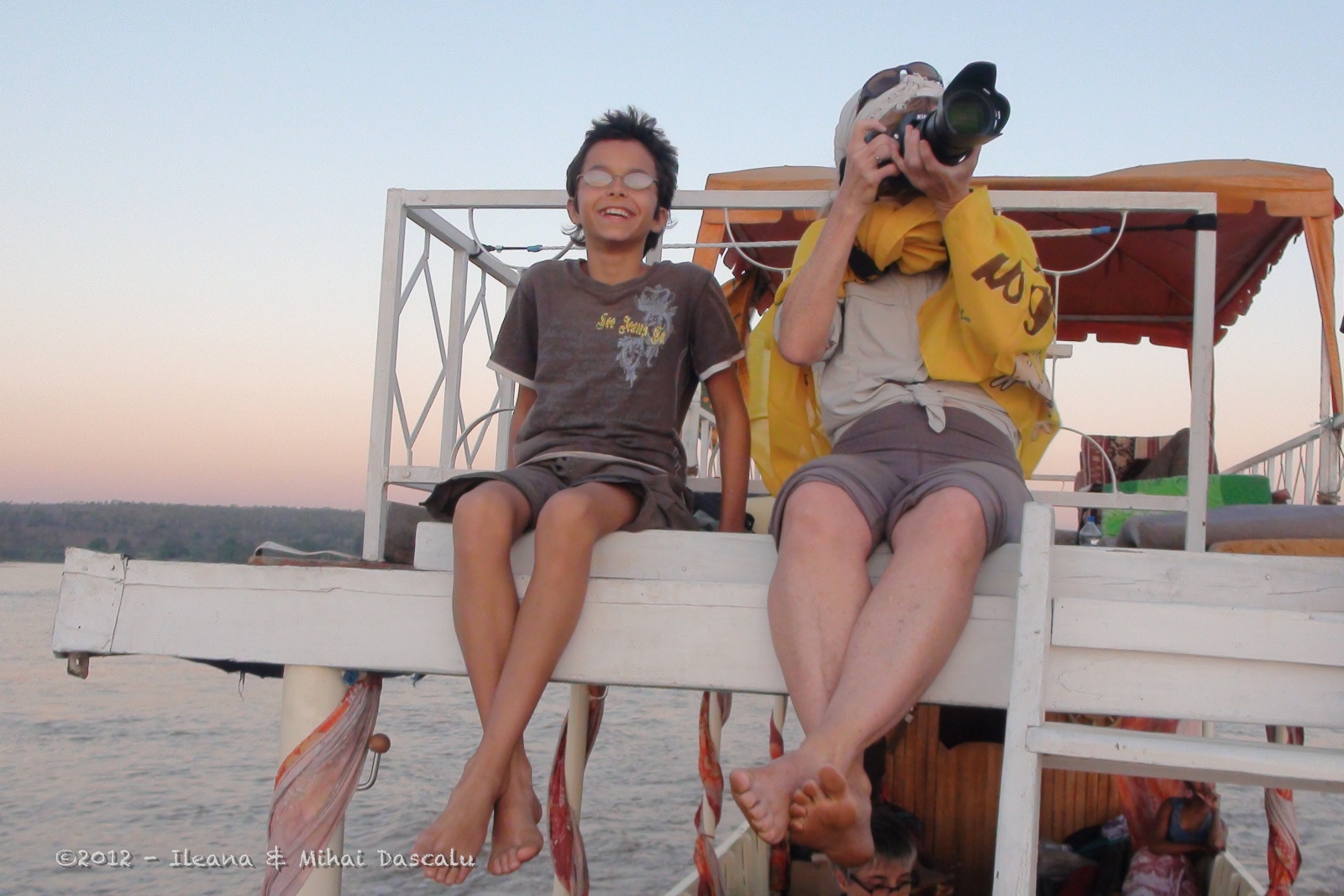
We had the more comfortable option, a little power boat. We had a guide Ernest, two cooks and a three people crew. The river is wide but very shallow, they ride in zig-zag continuously to avoid the boat getting stuck in the sand. When it does get stuck, the crew jumps in the water and pulls the boat out. At the busiest time of the year I counted 18 foreigners taking the trip. There were four power boats and one pirogue. All the time we were almost alone on the river but we would ran into the others at the night camps, tiny tents perched on the sandy banks. With eight people, we were the busiest boat and we had the best of times with three Canadian ladies. The first night we arrived at the waterfall, visited it quickly and when to move a couple hundred yards upstream for the camp the engine was dead! They somehow managed to get us there in the dark, using another boat and the guys in the water pushing the boat. The next day we got back to the waterfall for a bath, later visited a local village.


Amazingly, one of the pilots of the other boats almost cut off his finger in the engine, but they found a hospital where he got the first aid. The emergency room physician who was on our boat went to check it out and when she came back she shrugged her shoulders: "their doctor did everything he needed to do". The pilot went on, helping as much as he could with one hand and suffering in silence. The last night, the locals danced for us and with some of us. I would have expected a collection at the end, but no, they just had a great time and went on for many hours after all the tourists retired. At midnight I scrambled out of my tent and begged the remaining party to shut up.
We had some good talks with our guide. We discussed the poverty of Madagascar, politics, traditions and his life plans. At thirty two he wouldn't marry until he would be sure that he could send his children to school. He wanted to go to the university, but his parents couldn't afford it. With the corruption of Madagascar he would have to pay big bribes to get a decent job, being a guide is the best he can manage, but is only a few months a year. He hopes to get a job as an English teacher if one of his friends from the capital can help him. Besides, the expected wildlife on the river didn't show us much. We saw a couple of lemurs by the waterfall, a couple crocodiles and sporadically a bird or two. The whole region seemed deserted, but still from nowhere, people would show up by the side and wave at us. Ernest told us about their lives. Here people are poor, but still they can find something to eat, roots, rice, beans, fish. In the dry season they would move on the banks of the river in little huts, when the rain comes they would move up the hill in bigger villages. He was more concerned about the poor people in the cities, "they really have nothing."

The third river day, after lunch we were left in Belo de Tsiribihina. Out of nowhere, there was a little city, with churches, school, pharmacy and several crummy hotels. Our driver, booked with another agency, was waiting for us. The way things work here is to rent a 4WD vehicle with driver and fuel included. The cost is $110 per day and you pay for every day until the car gets back to the owner. Somedays it could be eight hours on the road, one day we only used it fifteen minutes. All the hotels have free lodging and food for the drivers. We got on the road to the national park. Four hours, 100 km, on a dirt track, words cannot describe it. These roads might be like paradise for four-wheel enthusiasts, for normal people they are just hell. Six-eight months per year the roads are unpassable, a huge truck could take a full day, if it ever makes it. Now at the height of the touristic season, the tracks where dry and manageable, but painful. Surprisingly every few kilometers there was a little concrete bridge, sign that we are on meaningful road. And even more surprisingly we arrived in one piece at the entrance to the national park, crossed the Bekopana river on a little ferry and got to our luxury hotel "Orchidée de Bekopana". At $90 per night for a nice apartment it seemed affordable, until we saw the cost of the meals. It was the end of the fifth day on the road. They ran their generator a few hours per day, there was electricity! Hot water, a toilet with door, a nice little pool, French music in the restaurant. We stayed three nights. The first day we visited the Little Tsingy just a three hour walk for a warmup. We saw some animals and birds and a couple of nice vistas. It was "too easy" so Ioan and his parents added a night walk to look for the smallest mammal in the world, the mouse lemur, and sleeping chameleons.

The next day we took a complete tour to the Great Tsingy. Besides the admission to the park, they offer various itineraries, all with the mandatory guide, at various costs. Our complete trip combined all available itineraries. One hour on the "road" for 17 kilometers, seven hours hiking, the most amazing scenery we ever saw. It is impressive how well organized they are and what they achieved at such a remote location, the good infrastructure – via ferrata (mountain route equipped with fixed cables, stemples, ladders and bridges), rope bridges, walkways. We carried a harness at all the time, using it occasionally when negotiating vertical walls or crossing ravines. We scrambled up and down impossible jagged rocks, crawling and squeezing ourselves through incredibly narrow caves and occasionally leisurely walking through the forest. Crossing over a couple of suspended bridges over the abyss, we had fun, until we got tired. Maria had her own sort of fun pestering our guide, Tata, with questions about Malagasy language. By the end of the day she was able to remember 43 words and we all learned some grammar. I couldn't stop thinking that I had my good pants on me, the same pants I had at the Sydney Opera, but that was the case for the whole family. I remembered the hesitant question that Ernest had for us, the locals were wondering why the whole family is dressed in black, "is it a religious custom in your country?", "No, we only have one garment each!"


There is no source of money here. You bring everything with you, their biggest bill is a little over four dollars. I realized at some point that we don't have enough and we have to stop eating at the restaurant. The only other source of food was the little village down the road, they had some molded bread and tiny bananas in the market. Luckily, the hotel accepted our last dollars at 10% premium and we managed to get out.
The return to Antananarivo took another four days. First we did the same 100 km in reverse and crossed back the Tsiribihina river on a made up ferry, two boats linked with planks of wood and we got to the road for Morondava. Another 100 km on that, still dirt, but much better. We spent the night at the Ecolodge of Kirindy, a few cabins in a natural reserve. They decided some years ago to not allow tourists at night in the national parks, so this is one of the only places in Madagascar to see the night fauna, and the one where people can see the fossa, the main predator on the island. I didn't have much hope, after all we already looked for tigers in Nepal and lions in Africa without success. But here, in the Kirindy reserve, two fossas were camping by the huts, they were hungry and we were warned they could even get in the cabins and chew our shoes. The night walk was great, but was enough for my family, the last few days have been tough and the next morning they just wanted to sleep. I also took a day tour joining James, an English teacher from Nottingham and saw my last lemurs.

After a few more hours in the quiet camp we got back on the road for the last attraction, the baobabs of Madagascar. This is the iconic image of the country, best visited at sunset, we didn't wait for it, we still saw some fantastic trees and got some good pictures. Half an hour later we reached asphalt, the feeling cannot be described.

Morondava, a tiny city by the Mozambic channel is the return to civilization, Malagasy way. They have an airport, some stores and countless hotels by the beach. It is 700 km from Antananarivo, but they improved the road in the last years. We had a reservation to fly, my family was ready to take the road and save money. I didn't know what to do. With four dollars in the pocket and the whole bank system in Madagascar "en panne", I walked all over, 8 km in the sun, from one bank to another and to the airline office, trying to decide. For ground transport we could rent a car, it was really expensive (paying the trip both ways) or we could take the public option called taxi-brousse. These are Toyota or Mazda minivans with 14 tiny seats, they don't leave until they fill all the places, they stop frequently and break often. A guy stopped me on the street offering me a full taxi brousse by myself, the price was too good. Buying all the places on the van would have been $230, his price was $180. It didn't sound right, but it worked.
After one day of rest, in the hotel rooms and by the beach, we left at 6 am for Tana. Before we left the driver and my guy had a little scuffle about the price, but we held steady, left them figure out their problem. When I payed the driver 13 hours later he was very happy to take the money. The whole ride was uneventful but taxing, I was glad to see this beautiful country by the road and by not flying we saved $582.
 |
| Grand Tsyngy, Tsingy de Bemaraha |
It is a national park and a World Heritage site for it's unusual limestone formations and ecosystems, unique in the world. There are hundreds of visitors every year (it's only accessible during the dry season) and our Lonely Planet guidebook laid out all the options. I found an SUV at the taxi station in Tana, the driver Mami, has been a guide for seven years and he held his price. We rode for four hours from Antananrivo to Antsirabe, 180 km, $100. Mami wanted twice the money for the next leg of the road, we said no thank you. I went in the market looking for a car and found a spacious Mercedes van for the right price. After a night spent at "Chez Billy", a cheap but nice guesthouse, we rode to Miandrivazo another 220 km and four hours down the road. There we stayed at Akory Aby, a tolerable hotel. We had booked a boat to take us down the Tsiribihina river. It started with a detour to the police station to register ourselves and another 30 minutes in a beat up van to the loading dock. They have been organizing trips for tourists for several years. Classically it is a pirogue trip, three days in a narrow carved tree trunk on the river. The locals do it for about $100-130 per person. It takes them one week of paddling to get back upstream!
 |
| Loading dock! Everybody waves at us. |
 |
| Mass transportation, Tsiribihina way |

 |
| The waterfall |
 |
| Sunrise over the river |

 |
| I am a vasa |
Amazingly, one of the pilots of the other boats almost cut off his finger in the engine, but they found a hospital where he got the first aid. The emergency room physician who was on our boat went to check it out and when she came back she shrugged her shoulders: "their doctor did everything he needed to do". The pilot went on, helping as much as he could with one hand and suffering in silence. The last night, the locals danced for us and with some of us. I would have expected a collection at the end, but no, they just had a great time and went on for many hours after all the tourists retired. At midnight I scrambled out of my tent and begged the remaining party to shut up.
 |
| Ioan, Maria, and some of the dancers from last night |
We had some good talks with our guide. We discussed the poverty of Madagascar, politics, traditions and his life plans. At thirty two he wouldn't marry until he would be sure that he could send his children to school. He wanted to go to the university, but his parents couldn't afford it. With the corruption of Madagascar he would have to pay big bribes to get a decent job, being a guide is the best he can manage, but is only a few months a year. He hopes to get a job as an English teacher if one of his friends from the capital can help him. Besides, the expected wildlife on the river didn't show us much. We saw a couple of lemurs by the waterfall, a couple crocodiles and sporadically a bird or two. The whole region seemed deserted, but still from nowhere, people would show up by the side and wave at us. Ernest told us about their lives. Here people are poor, but still they can find something to eat, roots, rice, beans, fish. In the dry season they would move on the banks of the river in little huts, when the rain comes they would move up the hill in bigger villages. He was more concerned about the poor people in the cities, "they really have nothing."

 |
| The fauna of Tsiribihina? |
 |
| Long talks on the boat, Danielle and Ioan |
 |
| Our car is coming |
 |
| Great companions |
 |
| With the crew, last moments |
The third river day, after lunch we were left in Belo de Tsiribihina. Out of nowhere, there was a little city, with churches, school, pharmacy and several crummy hotels. Our driver, booked with another agency, was waiting for us. The way things work here is to rent a 4WD vehicle with driver and fuel included. The cost is $110 per day and you pay for every day until the car gets back to the owner. Somedays it could be eight hours on the road, one day we only used it fifteen minutes. All the hotels have free lodging and food for the drivers. We got on the road to the national park. Four hours, 100 km, on a dirt track, words cannot describe it. These roads might be like paradise for four-wheel enthusiasts, for normal people they are just hell. Six-eight months per year the roads are unpassable, a huge truck could take a full day, if it ever makes it. Now at the height of the touristic season, the tracks where dry and manageable, but painful. Surprisingly every few kilometers there was a little concrete bridge, sign that we are on meaningful road. And even more surprisingly we arrived in one piece at the entrance to the national park, crossed the Bekopana river on a little ferry and got to our luxury hotel "Orchidée de Bekopana". At $90 per night for a nice apartment it seemed affordable, until we saw the cost of the meals. It was the end of the fifth day on the road. They ran their generator a few hours per day, there was electricity! Hot water, a toilet with door, a nice little pool, French music in the restaurant. We stayed three nights. The first day we visited the Little Tsingy just a three hour walk for a warmup. We saw some animals and birds and a couple of nice vistas. It was "too easy" so Ioan and his parents added a night walk to look for the smallest mammal in the world, the mouse lemur, and sleeping chameleons.
 |
| Let's get going |
 |
| Little stingy |

 |
| Mouse lemur at night |
The next day we took a complete tour to the Great Tsingy. Besides the admission to the park, they offer various itineraries, all with the mandatory guide, at various costs. Our complete trip combined all available itineraries. One hour on the "road" for 17 kilometers, seven hours hiking, the most amazing scenery we ever saw. It is impressive how well organized they are and what they achieved at such a remote location, the good infrastructure – via ferrata (mountain route equipped with fixed cables, stemples, ladders and bridges), rope bridges, walkways. We carried a harness at all the time, using it occasionally when negotiating vertical walls or crossing ravines. We scrambled up and down impossible jagged rocks, crawling and squeezing ourselves through incredibly narrow caves and occasionally leisurely walking through the forest. Crossing over a couple of suspended bridges over the abyss, we had fun, until we got tired. Maria had her own sort of fun pestering our guide, Tata, with questions about Malagasy language. By the end of the day she was able to remember 43 words and we all learned some grammar. I couldn't stop thinking that I had my good pants on me, the same pants I had at the Sydney Opera, but that was the case for the whole family. I remembered the hesitant question that Ernest had for us, the locals were wondering why the whole family is dressed in black, "is it a religious custom in your country?", "No, we only have one garment each!"
 |
| It's early in the morning |

 |
| What did we get ourselves into? |
 |
| It's lovely |
 |
| Piece of cake |
 |
| Somewhere above, there is light |
 |
| Out of the caves, smiling |
 |
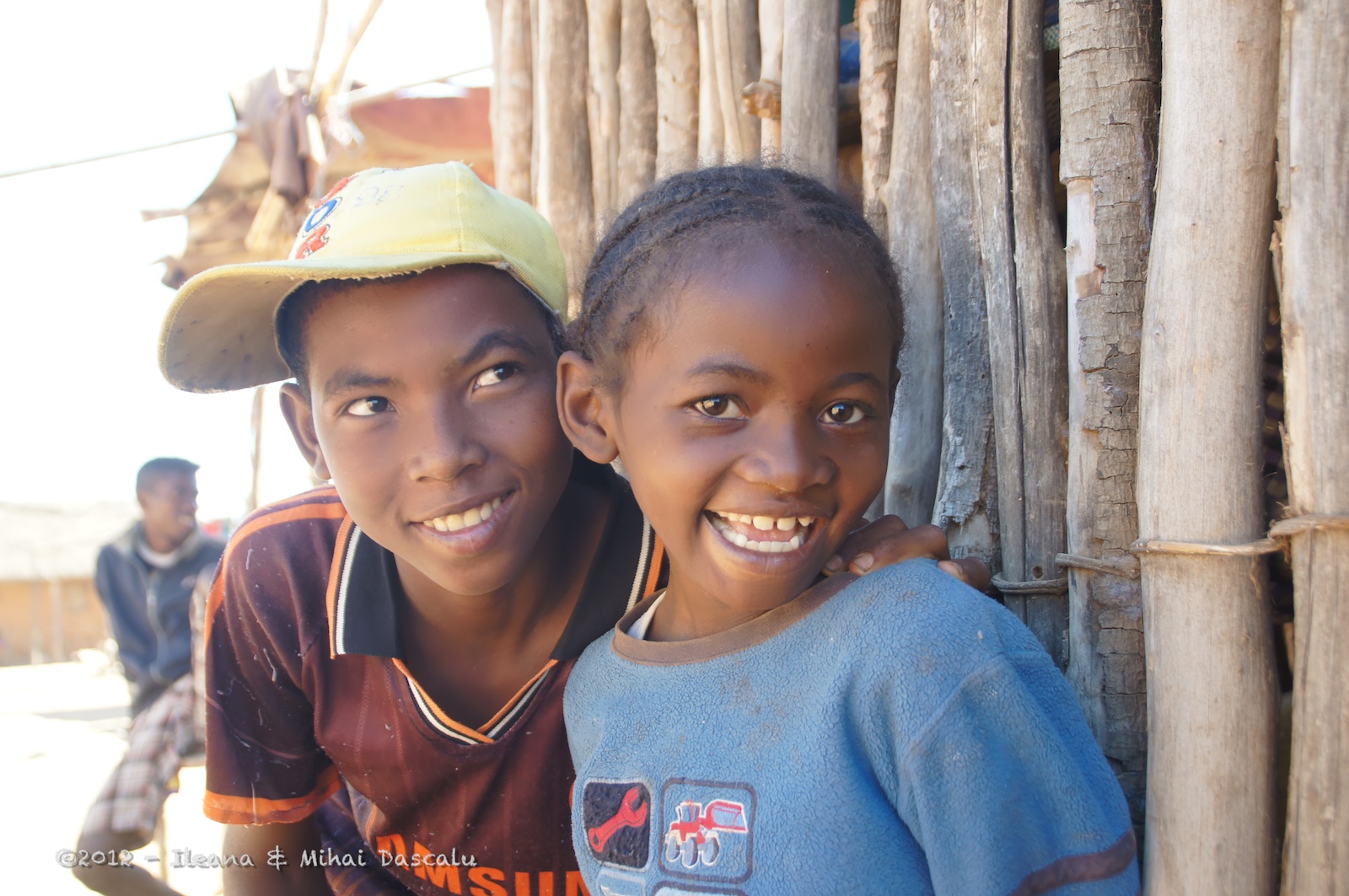
| The children hide in the shadow |


There is no source of money here. You bring everything with you, their biggest bill is a little over four dollars. I realized at some point that we don't have enough and we have to stop eating at the restaurant. The only other source of food was the little village down the road, they had some molded bread and tiny bananas in the market. Luckily, the hotel accepted our last dollars at 10% premium and we managed to get out.
The return to Antananarivo took another four days. First we did the same 100 km in reverse and crossed back the Tsiribihina river on a made up ferry, two boats linked with planks of wood and we got to the road for Morondava. Another 100 km on that, still dirt, but much better. We spent the night at the Ecolodge of Kirindy, a few cabins in a natural reserve. They decided some years ago to not allow tourists at night in the national parks, so this is one of the only places in Madagascar to see the night fauna, and the one where people can see the fossa, the main predator on the island. I didn't have much hope, after all we already looked for tigers in Nepal and lions in Africa without success. But here, in the Kirindy reserve, two fossas were camping by the huts, they were hungry and we were warned they could even get in the cabins and chew our shoes. The night walk was great, but was enough for my family, the last few days have been tough and the next morning they just wanted to sleep. I also took a day tour joining James, an English teacher from Nottingham and saw my last lemurs.
 |
| Fossa |

 |
| My last lemur |
After a few more hours in the quiet camp we got back on the road for the last attraction, the baobabs of Madagascar. This is the iconic image of the country, best visited at sunset, we didn't wait for it, we still saw some fantastic trees and got some good pictures. Half an hour later we reached asphalt, the feeling cannot be described.
 |
| Now this is a big tree, the locals think it has magic powers |
 |
| Avenue de baobabs in Madagascar |

Morondava, a tiny city by the Mozambic channel is the return to civilization, Malagasy way. They have an airport, some stores and countless hotels by the beach. It is 700 km from Antananarivo, but they improved the road in the last years. We had a reservation to fly, my family was ready to take the road and save money. I didn't know what to do. With four dollars in the pocket and the whole bank system in Madagascar "en panne", I walked all over, 8 km in the sun, from one bank to another and to the airline office, trying to decide. For ground transport we could rent a car, it was really expensive (paying the trip both ways) or we could take the public option called taxi-brousse. These are Toyota or Mazda minivans with 14 tiny seats, they don't leave until they fill all the places, they stop frequently and break often. A guy stopped me on the street offering me a full taxi brousse by myself, the price was too good. Buying all the places on the van would have been $230, his price was $180. It didn't sound right, but it worked.
 |
| The great beach in Morondava |
After one day of rest, in the hotel rooms and by the beach, we left at 6 am for Tana. Before we left the driver and my guy had a little scuffle about the price, but we held steady, left them figure out their problem. When I payed the driver 13 hours later he was very happy to take the money. The whole ride was uneventful but taxing, I was glad to see this beautiful country by the road and by not flying we saved $582.